Sherpas Climb a Mountain - Part 2
The story continues

In 2017, I went on a mountaineering expedition to Shivling in Uttarakhand and wrote an "article" for myself about the experience. I am sharing it on this newsletter now because I’ve recently been thinking a lot about what it means to climb mountains. I will conclude the series with these relatively new thoughts. But first, a flashback to July, 2017.
In case you missed it, you can read Part 1 here. A short recap is that the crew was at Camp 2, waiting for the weather to clear before ascending to the next camp, and I had mixed feelings about my presence on the mountain.
Fixing the ropes between Camp 2 and Camp 3 (the summit camp) was a multi-day, delicate, and dangerous process. It took the sherpas two full days to do it. Some sections required them to remove their boots to get their feet into the ice-cold holds without slipping. Once the route was open, the rest of us had to only trust the ropes they had fixed, and not get too tired.
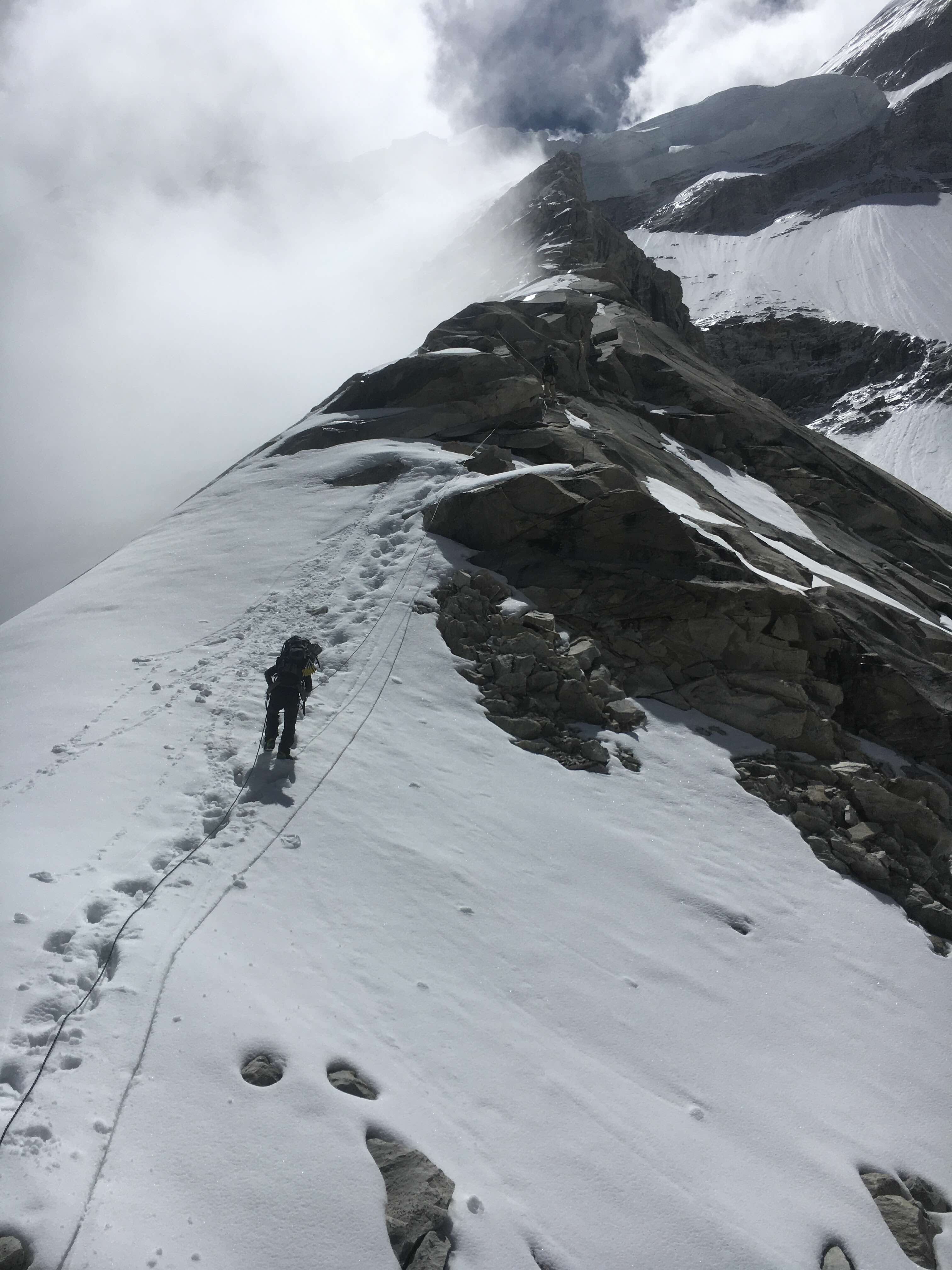
Three members, including me, set off in the morning a few days after the route was ready. The climb was steep and tiring, but far less than it would have been if we had been fixing the ropes or opening the route ourselves. There was one 10m vertical section which looked scary from afar, but Naresh (assistant lead climber) was waiting there to lessen our load by hauling our backpacks up before us.
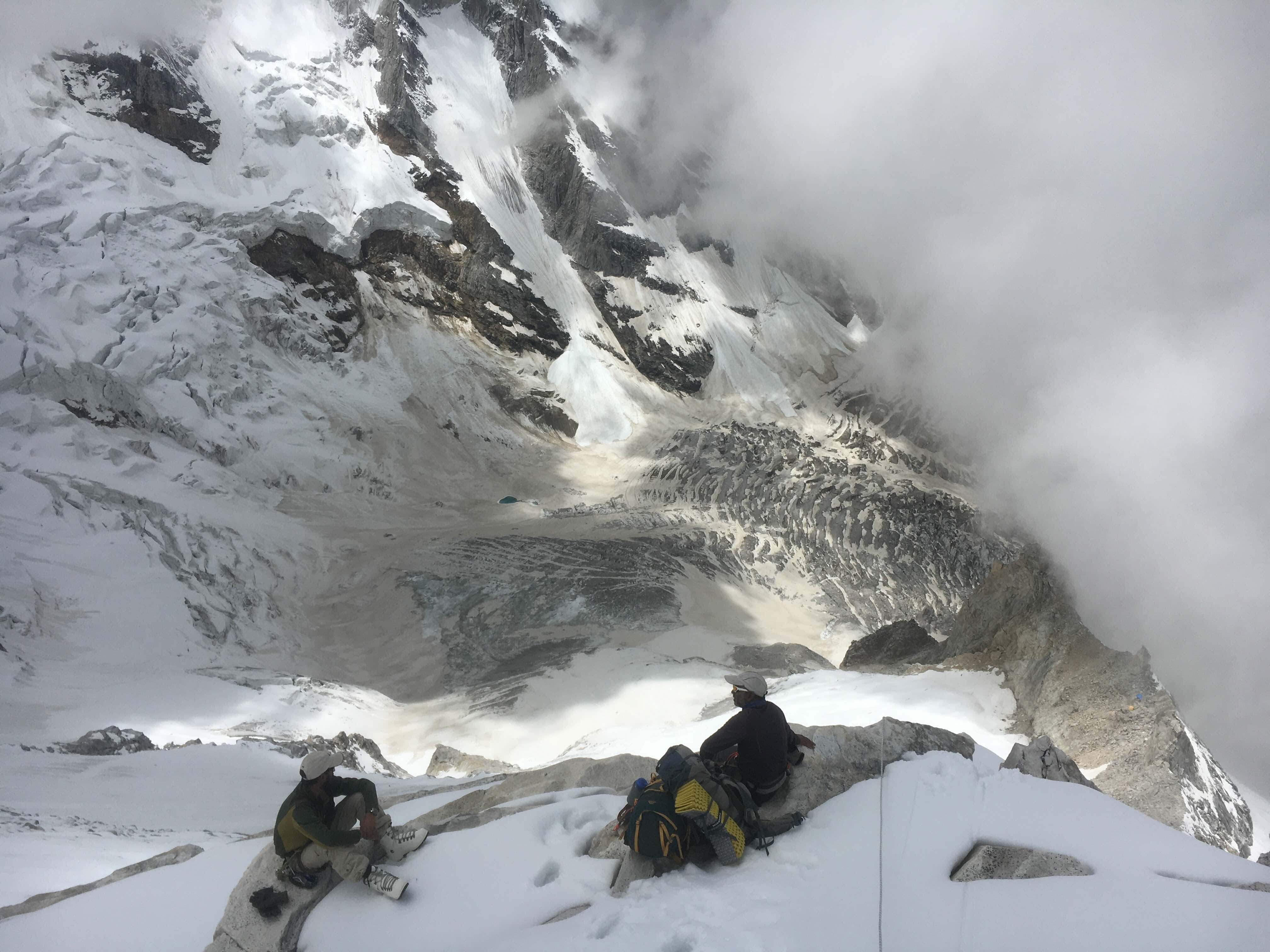
Our expedition leader Manoj, and I reached Camp 3 at about two in the afternoon. From up there, where the altitude was close to 6200 m, we could see the massive face of Thalay Saagar, another mountain known for its difficult climb. A French team had done a seemingly impossible thing last year and climbed straight up its ice face. They were awarded the Piolet D’Or, the Nobel Prize of mountaineering, except it is harder to get because some years the jury deems that no climb is worthy.
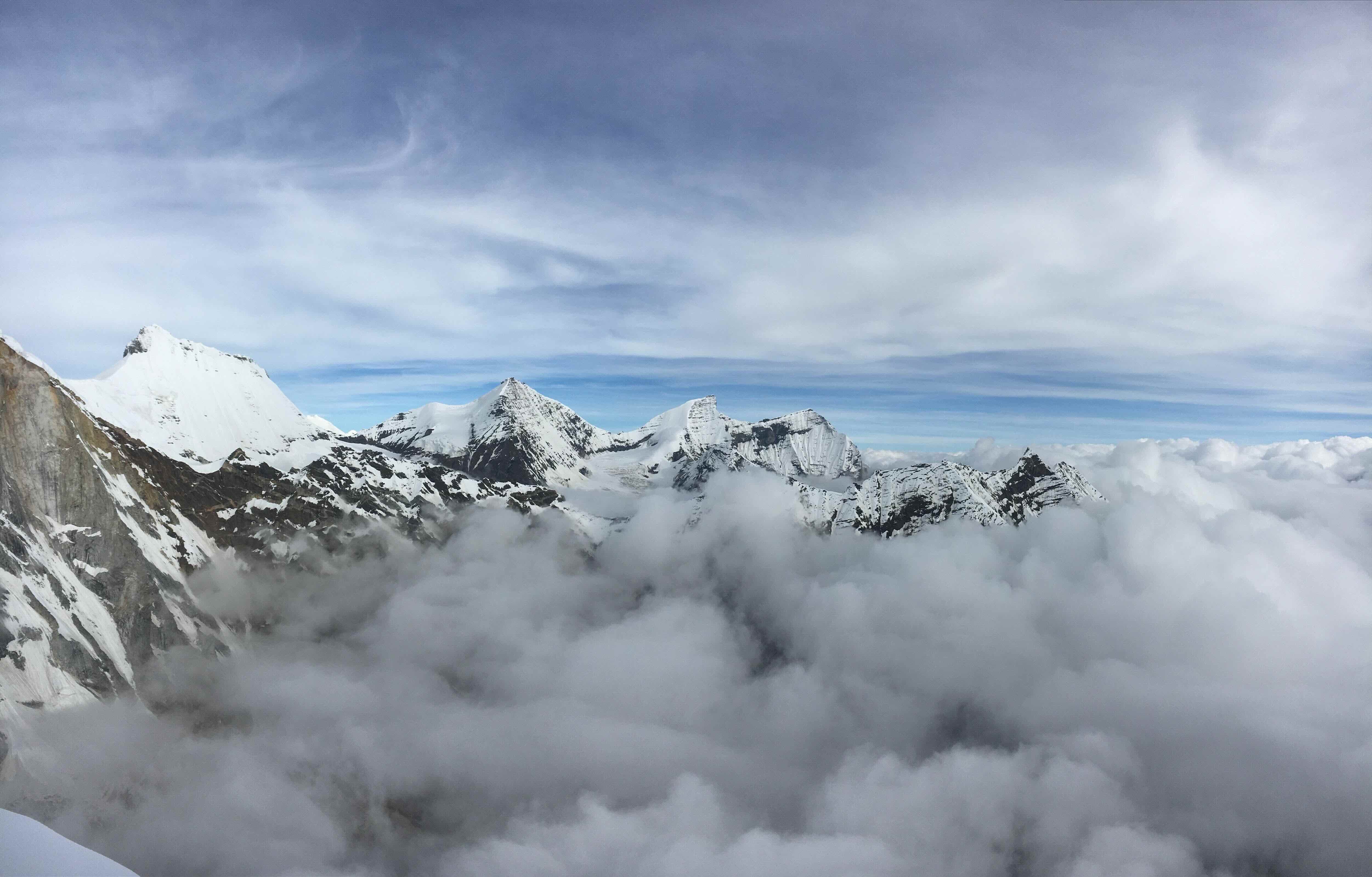
All around us were the amazing, imposing peaks of the Indian Himalayas. Thendup (the lead sherpa) told us their names and described the routes on each of them. Each mountain was different, each requiring a different sort of climbing, a different approach, both mentally and physically. Even the same mountain on different days could present a climber with completely different challenges.
As the sun began its descent towards the beautiful range in the west, we began to get worried because our third member, Swamy, had still not made it. He had been climbing in spite of a severe cold over the last few weeks. Nobody had questioned his judgement so far because his climbing resume was impressive: Denali (highest in North America), Aconcagua (highest in South America), Kilimanjaro (highest in Africa), just to name a few. His goal was to get to each of the seven highest peaks on the continents.
“The Himalayas are different from those mountains,” Naresh told me. “There, if you get lost, someone will rescue you, or come looking for you. Here if you get lost or something happens, there will be no rescue for many days. You will die.”
Waiting for Swamy at Camp 3, we were getting anxious, but also angry. He was endangering not only himself, but also the rest of us with his determination to keep climbing. Thendup decided to go down and help.
As the sun was setting, they both reached the camp. Swamy was only able to take a few steps before needing to rest, even with Thendup pulling him by his harness. Later in the trip, I learned how exhausted he actually had been during the climb. Unable to ascend by himself on some sections, he had to be pulled up. The only reason he had made it to camp safely was that Thendup had gone down to look for him in the dark.
Thendup is 43 years old and has been climbing mountains since he was a teenager. He has climbed almost all of the peaks in the Himalayas with a name, including four successful summit bids on Shivling. He is the mountaineering equivalent of an experienced musician: confident and completely at ease with his instrument and skill. There are no flashy notes or pomp; just precise, graceful, and efficient movements.
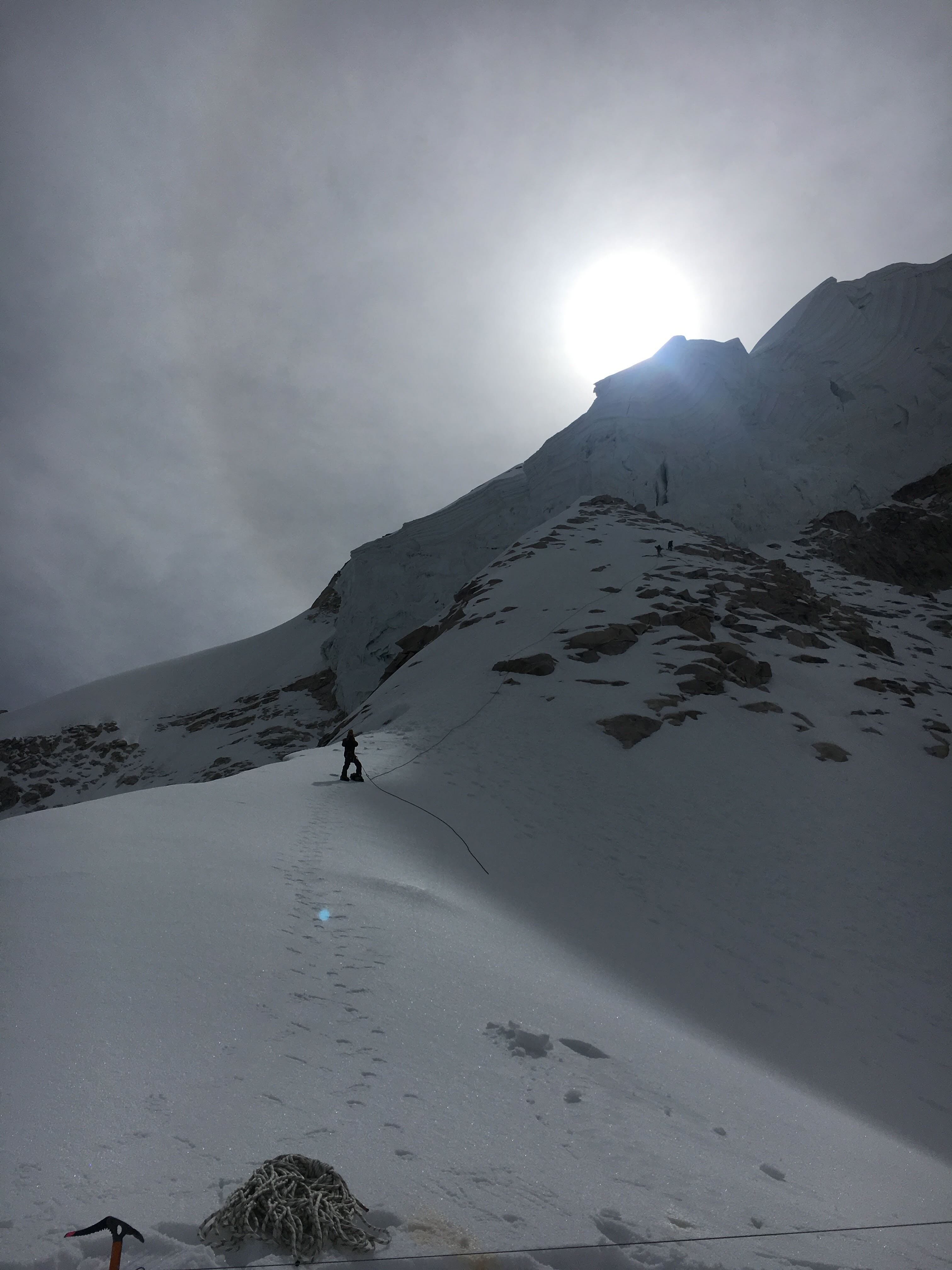
One moment at Camp 3 still stands out in my memories: I was standing outside our tent, looking at the others returning from the point where they decided it was impossible to go further. Thendup was coming down last, taking down the rope as he descended. He was walking backwards, as you have to on such crazily steep slopes — left-foot-ice-axe-right-foot-ice-axe — making it look as simple as a walk in the park. He was the kind of mountaineer I wanted to be, not the kind that just held on to ropes.
Another day, while the rest of us were in our tents, sleeping or reading or playing cards, Thendup took it upon himself to construct a trail. He lifted and arranged stones and boulders to clear a 20 m path, all just to pass the time. “In Darjeeling, I would be paid a lot of money for this,” he said proudly when he was finished. “This trail is so wide that we can all sit in a circle and eat food on it!”
One of his sons, Dawa, helped with ferrying equipment during the first half of the expedition.
Thendup doesn’t want him to become a sherpa, but that’s what Dawa has ended up doing. “He was studying,” he says, “then one day he decided to not study anymore and come on expeditions. What can I do?”
At the beginning of the trip, I was astonished by the amount of stuff we were carrying. To get all the food and equipment to the base camp, we had to hire the services of thirty five porters, each carrying a weight between 25 and 50 kilograms on their backs. Among the things the porters carried were four types of lentils, two kinds of beans, pineapples, mangoes, and watermelons.
“We don’t need all this. Why do we have so much stuff?” I asked Naresh. He shrugged. The list of items was decided by us, not by him. “This is nothing,” he told me. “You should see some of the other expeditions. They don’t leave town until we find the right brand of cereal bars for them.”
When we were close to running out of vegetables, we called Chandra Bahadur, the Sherpa who was biding his time at base camp while awaiting our return. We gave him a list of vegetables and groceries to bring, and he went to Gangotri to get them.
I can’t believe now that we sent someone on a 50 kilometre round trip trek — a journey that would take any of the rest of us four to five days with the load — just to get fresh food. Three days later, the food was delivered to the camp below us and our “runner”, Shankar, went to ferry the load back up.
Shankar is a beginner to the world of sherpas, but he’s proud of how fast he can climb. Up until last year, he was a taxi driver in the tourist areas of Rishikesh. After an accident that almost broke his legs, he started taking on other jobs while he recovered. He’s 26 years old, working to feed a wife and three kids at home. He has three missing front teeth and movie-star-in-shampoo-ad hair that he takes care of meticulously.
He met Thendup while both of them were doing construction work near Rishikesh, and was invited to tag along on future expeditions. Because of his lack of experience as a mountain guide, he does a little, but not a lot, of everything. His primary responsibility on this expedition was ferrying loads between camps.
“Are you happy here in the mountains?”, I ask him. “It must be better than being a driver.”
“It’s work,” he says as if I’m missing something obvious.
“But still,” I say, “isn’t this place amazing?”.
“It’s just another job. We work all day. Some days it’s beautiful, but many days I am tired.” He laughs, and continues. “You climb once between camps, I go up and down three times a day. After this expedition, I’ll do something else.”
He gives me his number and tells me to call him when I’m in Bangalore if I have any work for him or know someone who does: a watchman, a cook, a janitor. “Anything that pays,” he tells me.
…to be continued!
I'm here for this series! The descriptions of the mountainside, the thrill and suspense of the summit climb, the thoughtful interrogation of a client's motives, and the platforming of the crew - love every bit of it. Superb storytelling.
Absolutely loved this post! I felt as though i was one of the group of hikers. The reality of how much the support staff on such expeditions came through and how! When i read about these folks who do so much more work than the climbers credited with the accolades it hurts my heart. We all have worked with people who have stolen credit or tried to. For one’s job to literally be the wind beneath someone else’s wings. To create a support off of which someone else can achieve great things…ah, I can’t even begin to imagine. The line about one of the sherpas calling what be does ‘just a job’ when he does so much and about being so tired that he can’t even appreciate the beauty around him…sigh..so, so gut wrenching :( absolutely brilliant writing!